
Case Study: Sponsor Turns to Aliri After Feeling Neglected by Previous CRO
When a strained relationship with another lab left this sponsor feeling deprioritized and lacking confidence during pre-clinical analysis, they knew they needed to place their upcoming clinical phase samples with a partner they could trust.
Program risk came from:
- Poor, infrequent communication
- Lack of urgency
- Clear deprioritization of the program
- Lack of trust in the prior lab’s ability to support the program effectively
Download the case study to learn how Aliri’s Clinical Analysis and Precision Execution (APEX) Process provided a white-glove experience that alleviated this sponsor’s concerns with transparent communication and seamless method transfers.

Case Study: From Divergent Calibration Curves to 100% Sample Acceptance - ASO Quantitation
A sponsor developing a 17-mer 2’-MOE antisense oligonucleotide (ASO) needed a qualified bioanalytical method to quantify drug levels not only in cerebrospinal fluid, but in brain and spinal cord tissue homogenate matrices that are notoriously difficult for oligonucleotide LCMS work.
Rather than treating the divergence as an instrument or suppression problem by default, Aliri scientists systematically ruled out the
more common explanations and evaluated two extraction chemistries in parallel:
- Liquid-liquid extraction (LLE)
- Phenyl SPE with TEAA/DIPEA chemistry
Download the case study to view the results.
Case Study: Actionable, Qualified Spatial Profiling of Pharmacodynamic-Relevant Tumor–Immune Biology in NSCLC
The next evolution of spatial biology is the transition from exploratory imaging toward controlled generation of quantitative spatial metrics associated with pharmacodynamic-relevant tumor biology.
In non-small cell lung cancer (NSCLC) immuno-oncology studies, the challenge is not simply identifying immune cells within the tissue, but understanding whether their spatial organization reflects biologically meaningful mechanisms associated with therapeutic activity, immune exclusion, suppression, or cytotoxic engagement.
This case study illustrates how a qualified multiplex spatial panel can be deployed on FFPE NSCLC tissue to generate reproducible and biologically interpretable spatial metrics associated with pharmacodynamic (PD)-relevant tumor–immune biology. The objective: implementation of a controlled multiplex framework capable of moving beyond descriptive multiplex imaging toward more quantitative spatial characterization of immune biology.
Download the case study below.
Ready-to-Use Standalone Biomarkers
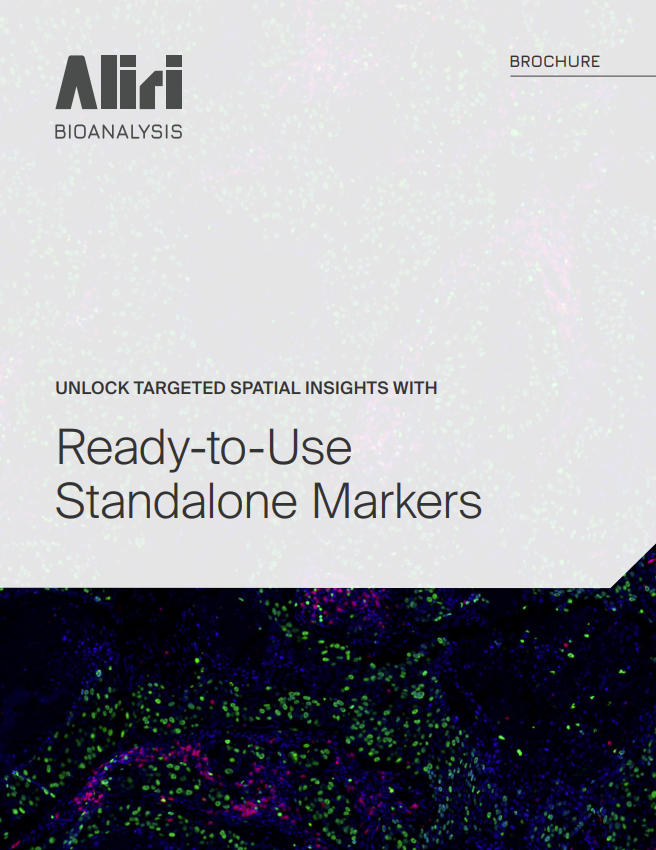
Understanding tissue biology at high resolution requires both flexibility and reliability. At Aliri, we provide a curated portfolio of verified standalone protein markers compatible with immunofluorescence and imaging mass cytometry (IMC) workflows.
These markers are designed to seamlessly complement our ready-to-use panels or to be deployed as individual targets, enabling tailored experimental designs without compromising on quality or timelines.
Download the full list of standalone biomarkers below.
Ready-to-Use Biomarker Panels: Immunology & Inflammation Collection
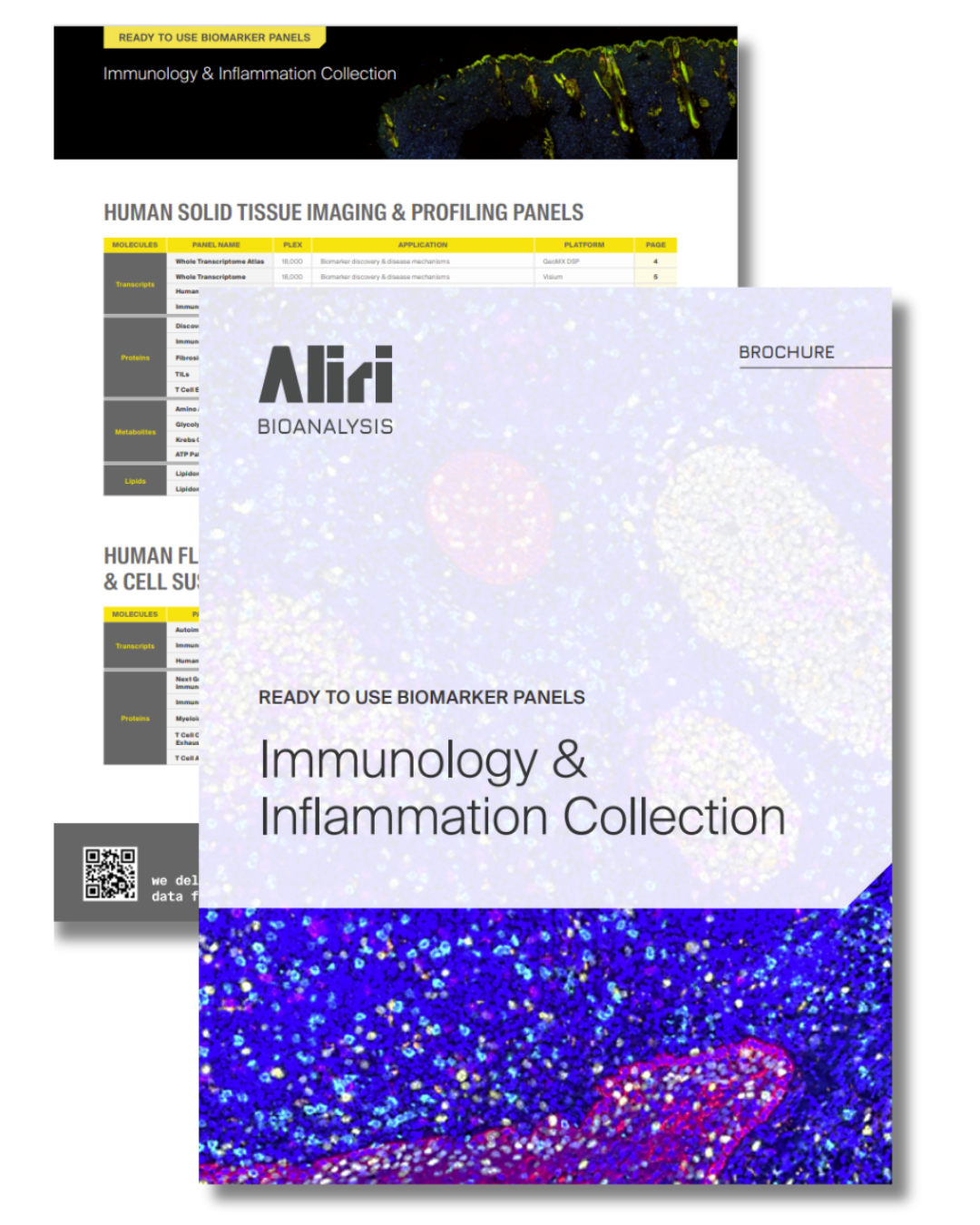
From disease onset to therapeutic response, Immunology and Inflammation research increasingly relies on biomarker data that must be robust, translatable, and biologically meaningful. Clinicians and translational teams now require the simultaneous assessment of growing numbers of biomarkers to better capture disease complexity, patient heterogeneity, and treatment response.
To expedite your research and minimize development costs, we have translated our years of immunology and inflammatory biomarker expertise into 23 ready-to-use panels. These panels are designed to address key disease-relevant questions about disease onset, progression, and response to therapy, including for example:
- Immune cell activation and differentiation
- Cytokine and chemokine signaling
- Tissue inflammation
- Pathway dysregulation
- Patient stratification
Download the brochure to view a full list of panels and biomarkers in our Immunology & Inflammation Collection.